
What Is Colorbond® Made Of and Why We Recommend It for Your Roof?

Have you ever looked up at your older roof and wondered why it doesn’t do the same as your neighbour’s Colorbond®-roofed house?

It’s probably got so many rusts on; plus, you’ve spent top dollars repairing it and replacing bad sections.

Maybe you have heard good things about Colorbond® steel but still not sold. They say it’s made of metal but you do not know what is really inside it and how long it will last.

So let us break it down clearly:

What is Colorbond® made of?

Why is this roof tech first launched in 1966 suddenly so much trusted? And why do Adelaide homeowners keep choosing it for their upgrades?

Let us dig in. And yes… we’ll bust a few myths along the way.

What Is Colorbond® Made Of?

At its core, Colorbond® steel is a high-strength, pre-painted metal sheet manufactured by BlueScope. It’s designed for tough Australian conditions, especially heat, UV, and coastal exposure.

When you hear people ask what is Colorbond® roof made of or what is Colorbond® roofing made of, they’re really asking about its multi-layer system.

Before diving into the layers, here’s a quick explainer:

Colorbond® steel isn’t a single metal. It has five engineered layers working together to stop rust, resist fading, and survive the brutal weather, including at the sea side where corrosion is an issue for house roofs.

The Five-Layer Colorbond® Structure

Here’s what sits inside every genuine Colorbond® roofing sheet. Each layer exists for a specific reason, and together they protect the steel core better than older galvanised roofing.

LayerFunction 
Steel baseMade from high-quality steel for strength and durability
Metallic coating (Zincalume®)Combines aluminium, zinc, and magnesium for strong corrosion resistance
Conversion layerEnsures perfect bonding between coating and paint
Primer coatAdds adhesion and enhances long-term protection
Top coatA baked-on Colorbond®Â® coating that resists chalking, fading, and flaking

Each layer exists for a specific reason, and together they protect the steel core better than older galvanised roofing.

This layered design blocks oxygen and moisture from reaching the steel core, which can trigger the corrosion process.

That’s why a Colorbond® roof can last longer than 45 years even in coastal suburbs like Glenelg, Christies Beach, Port Noarlunga and Port Willunga.

It also explains why it outperforms galvanised roofing, which uses a single zinc coating that corrodes faster when exposed to salt or debris.

If you’re planning a professional Colorbond® roof replacement, knowing these layers helps you understand the value of a quality replacement job.

How Colorbond® Roofing Is Manufactured

A lot of homeowners don’t realise how much goes into manufacturing Colorbond® steel. This isn’t a “painted sheet”. It’s a long, controlled industrial process backed by over 50 years of Australian testing.

Here’s the detailed Colorbond® manufacturing workflow, step by step.

Step 1. Raw Steel Production

It all starts with BlueScope transforming iron ore into steel slabs. Those slabs are rolled into thin coil strips using a cold-rolling mill.

This cold reduction boosts strength and creates a uniform sheet ready for coating.

Australian steel standards require strict tolerances for thickness and strength. Nothing leaves the mill without passing mechanical tests.

Step 2. Metallic Coating Application

Every strip enters the ZINCALUME line. This is where the aluminium, zinc and magnesium alloy is applied.

BlueScope refers to its next-generation formulation as Activate technology, and it’s proven to slow corrosion significantly.

The metallic coat provides barrier protection plus sacrificial protection. In everyday terms… it stops rust from eating through your roof.

Step 3. Conversion Layer Treatment

This layer is applied to help the paint stick perfectly. It’s invisible but essential.

Without it, the top coat would fade or peel far earlier.

Step 4. Primer Application

A baked primer coat gets added across the entire coil. This forms another barrier against corrosion and helps the top paint resist chalking.

Step 5. Top Coat Application (The Colour Layer)

This is where the signature Colorbond® colours come in. The paint is baked on at high temperature to form a durable, UV-resistant surface.

SA homeowners often choose Southerly, Basalt, Woodland Grey and Surfmist because they handle heat well and look great with local architectural styles.

Step 6. Baking Process

The coated coil travels through long ovens where the finish is baked into the metal. This is why the colour doesn’t peel like household paint.

Step 7. Testing and Certification

BlueScope tests the steel for:

Salt spray resistance

UV exposure

Humidity cycles

Outdoor exposure up to 15 years in test sites

The harsh Australian climate testing ensures each sheet stands up to real conditions.

Why Colorbond® Steel Is Perfect for Adelaide Homes

The Adelaide weather conditions aren’t gentle. We get 40-degree summers, long UV seasons, coastal winds, winter storms, and dust bursts. So roofing material must handle it all. Here are some of the top benefits of Colorbond® and why it works for SA homes.

• Weather Resistance: The multi-layered system, plus Activate technology, improves corrosion resistance drastically. You see the difference in suburbs near the coast where older metal roofs fail early.

• Heat Reduction: Thermatech solar-reflective technology helps bounce heat away. This means cooler rooms and lower cooling loads.

• Durability: With genuine sheets, fading usually takes decades. The baked-on surface keeps its colour far longer than painted metal.

• Sustainability: BlueScope notes recycled content in Colorbond® steel. It’s also fully recyclable at the end of life.

• Looks: Modern homes love it. Heritage homes use it. Newly built homes choose it.

Colorbond® offers classic, matt and metallic finishes across dozens of colours.

If you’re planning a roof replacement soon, talk to the local team behind Adelaide’s largest Colorbond® display.

Common Misconceptions About Colorbond® Roofing

People often ask what is Colorbond® roofing made of because they assume it’s just painted steel. But let’s break down some real misconceptions we see online and from onsite visits.

Misconception 1: “It’s too noisy when it rains”

We see this one a lot. One SA homeowner posted:

“House is noisy during rain and too hot in summer. Didn’t install anticon. Should I retrofit insulation or drop the ceiling and fill the cavity?”

A few things to know:

Noise Reality Check

A metal roof without anticon or insulation will be quite loud. But with proper anticon, sarking and ceiling insulation, noise drops drastically.

Most Adelaide homeowners who retrofit insulation say the sound becomes a soft patter, not a drum.

If you’re considering adding anticon roof insulation, it’s a smart move for both thermal and acoustic improvements.

Misconception 2: “Colorbond® rusts easily”

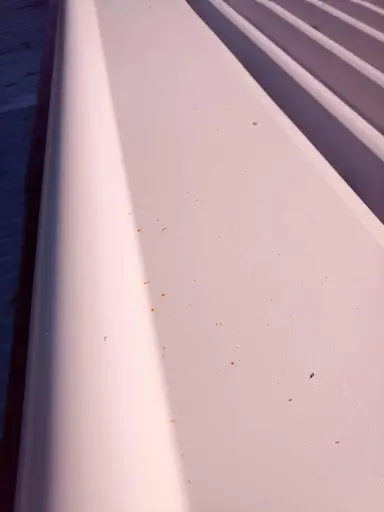
If you ask us, does Colorbond® rust, the straight answer would be, no, not when the right Colorbond® is installed and by the right roofer.

A homeowner recently said their new roof “rusted fast”. But the photo showed cutting debris left by installers.

close-up of a metal roof surface showing what is colorbond made of

Grinding dust can rust in days. It then stains the surface, looking like roof corrosion.

This is caused by poor installation, not product failure.

Misconception 3: “The colour fades too quickly”

Another Adelaide homeowner mentioned a powdery white layer forming. This usually indicates chalking in old roofs or non-genuine imported sheets.
Genuine Colorbond® roofs generally fade slowly over decades.

Why Expert Colorbond® Installation Matters

Installing a roof isn’t a “grab the sheets and screw them down” job. Small mistakes can lead to major issues, one of which you’ve seen in Misconception 2.

For example:

Wrong fasteners cause galvanic corrosion

Poor edge detailing creates leak points

Leaving metal shards voids warranties and can lead to roof rust

Improper sealing leads to wind uplift

This is why choosing experienced installers is critical for your Colorbond® project.

At Roof & Render SA, we bring four generations of roofing experience and SA-specific knowledge. We handle full replacement only, using genuine BlueScope products with workmanship, watertight and Bluescope warranties.

We also offer Colorbond® fascia installation services as part of a full roof replacement.

If you want expert eyes on your home, book a Colorbond® roof inspection today. We’ll walk you through materials, colours, insulation options and replacement scope in simple terms.

Conclusion

Understanding what Colorbond® is made of helps you choose a roof that handles Adelaide’s harsh conditions, lasts decades and stays looking new for years.

You now know the five-layer structure, the manufacturing detail, the proper installation methods, and the myths that confuse homeowners.

If you’re ready to upgrade to a genuine Colorbond® roof replacement backed by SA’s longest family roofing legacy, reach out anytime. You can contact the team online through our contact page or drive to our interactive showroom at 2/22 O’Sullivan Beach Road, Lonsdale, SA. We’re always happy to help you choose the right roof for your South Australian home.

visit australia's largest colorbond showroom

Fill in the form below to book a free consultation at our Colorbond Showroom in Lonsdale.

We will give you a call within 24 hours to organise a time that suits you.

visit australia's largest colorbond showroom

Fill in the form below to book a free consultation at our Colorbond Showroom in Lonsdale.

We will give you a call within 24 hours to organise a time that suits you.