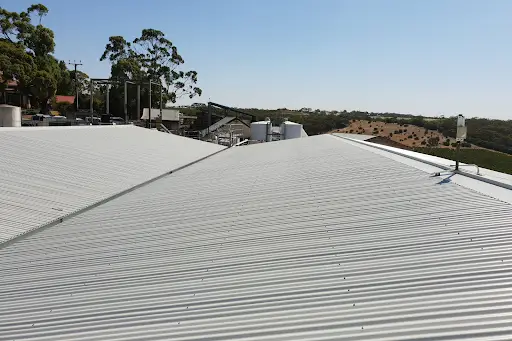
Metal roof noise is one of the biggest frustrations we hear from homeowners in South Australia. Your metal roof was either poorly installed, or it’s a home with pre-2000 roof installation. While those sounds are usually harmless, they can be signs of bigger issues.
If roof noises keep you up, you’re not alone. During the summer, metal roofs can start creaking or popping as the heat causes the panels to expand and contract, especially if the screws have loosened or there’s no insulation underneath.
In this guide, we’ll break down exactly why it happens, what it means for your home, and the proven solutions our team at Roof & Render SA uses to silence noisy roofs for good.
Metal conducts vibration better than tiles. When rain, hail, or wind hits it, it naturally echoes. But the difference in sound between a metal and tile roof is usually less than 6 decibels, according to a Swedish study on rain impact (52 dB vs 46 dB).
That’s roughly the difference between a quiet conversation and a library whisper, barely noticeable indoors if the roof’s built right.
So, why do some Adelaide homeowners swear it sounds like marbles rolling across their ceiling?
Usually it’s not the metal; it’s what’s beneath it.
• Loose fasteners let panels flex, amplifying vibrations.
• No insulation or acoustic blanket means nothing stops the sound from bouncing through your ceiling cavity.
• Open truss framing, common in older South Australian homes, creates a perfect echo chamber.
Also, you may experience metal roof noise due to loose elements in:
• older character homes,
• post-war cottages,
• 1970s fibro or Weatherboard properties,
• and mid-century brick houses around suburbs like Woodville, Glenelg, Edwardstown, and Prospect, where original galvanised or early Colorbond® roofs are still common.
New Colorbond® installations done properly are rarely loud. In fact, many of our customers who switch from tile to Colorbond® are shocked at how quiet it is, especially when roof insulation is added.
Noise comes from specific mechanical or thermal reasons, all of which are fixable. Perhaps you’ve experienced enough of a noisy roof and want to get it right once and for all. Here are some common reasons:
Metal roofs move slightly with heat. If fasteners are over-tightened, they restrict this movement; if they’re under-tightened, panels rattle. Both cause creaks.
A typical Colorbond® roof has roughly 10,000 to 12,000 screws on a 250 m² house. Even a 1% looseness can mean over 100 points of vibration.
Fix: Replace old screws with new, self-sealing neoprene washers and torque them evenly on the ridges (not in the valleys).
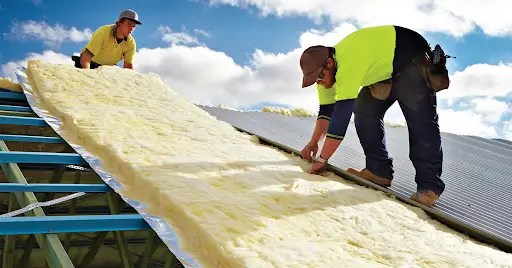
Many older homes skipped anticon-type roof blankets because builders saw them as “optional.” Big mistake. These thin, fibreglass or foil-backed rolls absorb up to 70% of airborne roof noise and double as thermal protection.
Fix: If you’re preparing for a roof installation, ask us to install a roofing blanket like Bradford Anticon® or CSR EarthWool® directly under the sheets. In some cases, adding a 50 mm ceiling insulation batt reduces interior noise by an additional 5–7 dB.
Adelaide’s weather is notorious for daily extremes, 40 °C days dropping to 18 °C by night. Metal sheets expand about 1mm per metre with every 20°C swing. Without slotted holes or expansion joints, you’ll hear loud pops as the sheets fight for space.
Fix: Allow for sheet movement by using flexible fasteners, slip joints, and ensuring proper flashing clearance.
Open truss framing acts like a soundboard. Rain hits, reverberates through air cavities, and magnifies indoors.
Fix: When re-roofing, we’ll add ply or OSB (decking) beneath the metal to absorb vibration. A good substrate typically drops interior noise by up to 10 dB.
It’s not all theory. Here’s what Adelaide locals and other Aussie homeowners say online about noisy roofs:
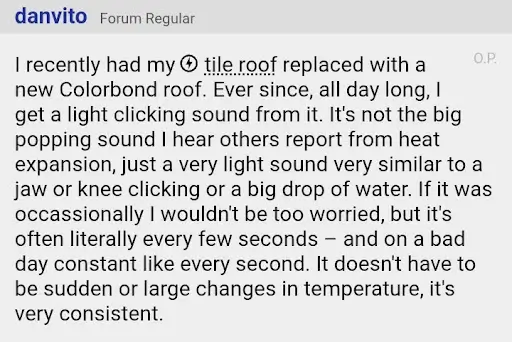
“All day long, I get a light clicking sound from it. … It’s often literally every few seconds – on a bad day, constant like every second.” — Whirlpool user about their new Colorbond roof post tile replacement.
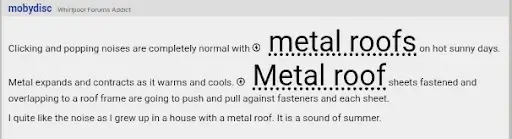
“Clicking and popping noises are completely normal with metal roofs on hot sunny days. … fastened and overlapping … push and pull against fasteners and each sheet.” — mobydisc replies on a Whirlpool Forum after a post from a homeowner complaining how their roof “makes what I consider to be excessive thermal expansion noise… essentially sounding like raindrops hitting the roof… like Chinese water torture.”
According to another homeowner on HomeOne forum: “It sounded like continuous gunshots. … widening the roof fastener holes … significantly lessened the noise.”
These examples confirm the issues homeowners face in SA. Noise, popping, and gunshot sounds are part of real, lived experiences, especially when the roof isn’t done right or insulated.
At Roof & Render SA, we hear versions of these stories weekly. In another case in Glenelg, the homeowner said the roof “banged like gunshots in wind shifts.” After replacing the roof and installing the missing acoustic blanket, their roof was quiet again overnight.
You can’t duct-tape a noisy roof into silence. True fixes need proper tools, quality materials, and skilled hands. Here’s how pros like us quieten roofs for good during roof replacement or installation:
• Re-engineer fastening and sheet layout: We don’t reuse old frames or fittings. Every Colorbond® sheet is laid out with precise screw spacing and alignment to allow natural movement in Adelaide’s heat – about 1 mm expansion per metre for every 20°C change. Slotted fasteners and sealing washers stop that dreaded “ping” and “pop” sound that happens when panels bind too tightly.
• Install modern acoustic underlays: Between your battens and sheets, we fit sound-dampening membranes such as Enviroseal® ProctorWrap™ or Bradford Thermoseal. These act like shock absorbers, soaking up the drumming effect of rain before it travels through your ceiling cavity.
• Fit insulation blankets properly: A high-density anticon blanket is fitted flush under every sheet. That single layer can reduce rain noise by up to 60% and improve insulation.
Replace old metal with premium 0.42 mm Colorbond® steel: We never install cheap 0.35 mm imported steel. Thinner sheets flex and “oil-can,” a common cause of loud, tinny vibration. BlueScope’s 0.42 mm Colorbond® holds its form even during 100 km/h winds and intense temperature swings, staying silent and watertight for decades.
• Add optional solar vents: For homeowners chasing maximum acoustic comfort, we can add a roofing blanket over the rafters and install roof solar vents, also known as solar whirlybirds, that release trapped heat. Hot attic air is one of the biggest causes of thermal expansion noise. Letting it out keeps panels stable and quiet.
Each fix during roof replacement can reduce interior sound by a few decibels on its own. Together, they make your home as quiet as a tiled roof; sometimes quieter.
Homeowners often try siliconing seams or stuffing insulation from the ceiling side. It seems quick, but those band-aids only mask the symptom.
A Reddit user wrote:
“I tried filling the ceiling cavity myself, still loud. Turns out the sheets were loose under the ridge flashing.”
Noise usually starts where you can’t see: under cappings, at joints, or where fasteners meet the purlins. Without climbing up safely and checking every panel, you’re guessing.
Professional roofers know where to look. We inspect for movement, fastener torque, insulation coverage, and framing gaps. Most assessments take under an hour and prevent far pricier repairs down the track.
If your roof is old, rusted, or patched too many times, replacing it may be a smarter (and quieter) option. Here’s how to tell:
• Persistent noise despite insulation
• Visible movement in strong wind
• Corrosion or thinning metal
• Water stains or minor leaks inside the ceiling
When that happens, a full Colorbond® replacement is the best fix. At Roof & Render SA, we remove old asbestos, metal, and tile roofs, and replace them with premium 0.42 mm Colorbond® backed by:
• 10-year workmanship warranty
• 20-year watertight warranty
• Up to 45-year BlueScope® steel warranty
We also install roofing blankets, gutters, and solar vents as part of a complete re-roof, never as a quick add-on. Every job covers 100 m² or more, no pergolas or verandahs, so we focus entirely on solid, full-scale roofs that last generations.
Four generations of experience mean we’ve seen it all, from rusted tin shacks in Gawler to Colorbond upgrades in Brighton. We even run an interactive showroom in Lonsdale, where you can hear the difference between roof types under a simulated rain display.
That’s engineering proof. Our displays show how sound changes with insulation layers, roof thickness, and fastener types. You’ll literally hear what quiet construction sounds like before signing anything.
And because we’ve been around for over 100 years, you’re not dealing with pop-up contractors who vanish once the job’s done.
That popping is caused by thermal expansion and contraction. As Adelaide’s temperature drops, the metal contracts, and if your sheets or fasteners don’t have room to move, you’ll hear those clicks and bangs. Properly installed Colorbond® roofs with expansion spacing and flexible fasteners prevent that completely.
Yes. A tightly fitted anti-convection blanket or acoustic underlay absorbs impact noise from rain and stops sound from echoing through ceiling cavities. When combined with ceiling insulation, it can cut roof noise by more than half, something we include as standard in all new installations.
Not when installed properly. Rain on metal roofs averages around 52 decibels, compared to 46 decibels for tiled roofs. Once insulation and underlay are added, Colorbond® roofs are often quieter than tiles in heavy rain.
Creaking usually means the sheets were fixed too tightly or without enough room for heat movement. The long-term fix isn’t a patch but a proper reinstallation with slotted fasteners, high-grade underlay, and correct spacing. That’s part of what we deliver in every full Colorbond® roof replacement.
A combination approach works best: dense blankets beneath the sheets, high-quality acoustic underlay between the battens, and a thick ceiling insulation layer below. Together, these absorb vibration and muffle rain, making a metal roof as quiet and comfortable as any modern home can be.
If your Colorbond® or metal roof sounds like a war drum, don’t panic. In most cases, that noise comes down to something simple: missing insulation, tight fasteners, or not enough room for thermal movement. It simply means it wasn’t designed to withstand Adelaide’s extreme weather conditions adequately.
Before the next storm rolls in, have a professional take a look. At Roof & Render SA, we replace and rebuild roofs the right way, using premium Colorbond® steel, acoustic layers, and expert installation that eliminates noise for good.
We’re not just another roofing company. We’re a fourth-generation South Australian family with over 100 years of experience, trusted warranties, and a name that’s literally built on quiet, watertight roofs.
Call Roof & Render SA today for a professional inspection and quote on a full Colorbond® roof replacement.
Fill in the form below to book a free consultation at our Colorbond Showroom in Lonsdale.
We will give you a call within 24 hours to organise a time that suits you.
Fill in the form below to book a free consultation at our Colorbond Showroom in Lonsdale.
We will give you a call within 24 hours to organise a time that suits you.