
If you own or are handling a home with a metal roof in Adelaide, you know the heat under it can be brutal during summer months like December, January, and February.
On a 38°C summer day, the roof space above your ceiling can hit over 60°C, making bedrooms stifling and power bills climb. In winter, damp air inside the roof cavity can condense on the steel, leading to rust, mould, and sagging insulation.
Having the right roof vents for your metal roof lets trapped hot air escape in summer, brings in fresh air year-round, and prevents condensation damage in cooler months.
Backed by over a century of local roofing expertise, this guide from Roof and Render breaks down how roof ventilation works in South Australia’s climate, why it’s vital, and the top choices for the best.

Before choosing the best roof vents for metal roofs, it helps to understand why or if you need them at all in your location in South Australia.
Our climate is extreme, and your roof cavity feels it first. Without a well-planned ventilation system, you’ll face higher energy bills, faster roof wear, and indoor air problems.
In summer, roof space temperatures in Adelaide regularly exceed 60°C. That stored heat radiates into the ceiling, pushing air conditioners to work harder and increasing household energy consumption by up to 20%.
In winter, humidity levels rise inside roof cavities, especially in coastal suburbs like Glenelg, Brighton, and Port Noarlunga. Moist sea air condenses on the underside of metal roofs, corroding sheets and damaging insulation.
Without exhaust vents, trapped hot air has nowhere to go. It presses into living spaces, making summer nights warmer indoors. A balanced ventilation system with both intake and exhaust can reduce roof space temperatures by 10–15°C, significantly lowering cooling costs.
Moist air trapped in attic spaces leads to the buildup of mould, timber rot in battens, and rust along sheet laps. Effective roof ventilation flushes damp air out before it condenses, protecting structural timber and extending the lifespan of the metal roof.
Installing the right roof vents is one of the most effective, low-maintenance ways to keep temperatures stable, protect your roof, and improve indoor air quality year-round:
Studies show that roof ventilation can significantly reduce heat flux by 50% in summer. Less heat in the roof cavity means cooler rooms below and reduced strain on air conditioning systems.
Moisture corrosion is a major cause of early failure in metal roofs. Venting out damp air slows corrosion and extends the life of sheets, fixings, and underlayment.
By clearing stale air and pollutants from roof spaces, ventilation helps maintain healthier indoor air circulation and reduces stuffiness.
Keeping the roof cavity dry helps prevent rust from spreading beneath sheets, especially in older residential properties and light industrial buildings with ageing roof structures.

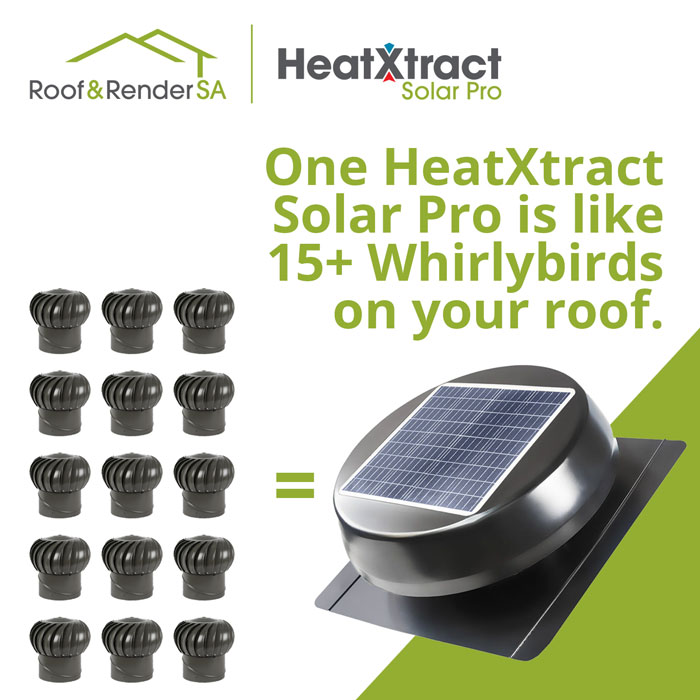

The best type of roof vent, and the only one we recommend and install in Adelaide at Roof and Render, is a thermostatically controlled solar roof vent. These units automatically switch on when the roof cavity reaches a set temperature (typically around 29–30°C), ensuring consistent airflow only when needed. In Adelaide’s climate, they can move up to 2,300–2,800 cubic meters of air per hour, cutting summer roof cavity temperatures by up to 20°C.
Before you buy, assess these points:
Low-pitch metal roofs (under 15°) often need more vents to maintain adequate crossflow. For example, a 200 m² skillion roof might require two solar vents for balanced ventilation. Hip roofs with multiple ridges may need vents on separate sections for even coverage.
Look for vents with a high airflow capacity. Wind-driven turbine vents can move 85–100 m³ per hour in coastal winds over 20 km/h. But solar vents maintain steady output even on still days. Again, it’s a better fit for Adelaide’s inland suburbs where wind speeds average 11–15 km/h.
Low-profile solar vents keep the roofline clean. Many models are available in Colorbond® colours like Basalt®, Woodland Grey®, Surfmist®, and so they seamlessly blend with the roof finish.
Solar-powered roof vents have zero running costs and can lower roof cavity heat enough to reduce cooling energy consumption by 10–15%. They’re also ideal for sheds, warehouses, or off-grid industrial buildings.
For metal roofs, choose vents made from stainless steel or powder-coated aluminium to prevent galvanic corrosion with Colorbond® sheets. Avoid mixed metals like copper with zinc/aluminium-coated steel.
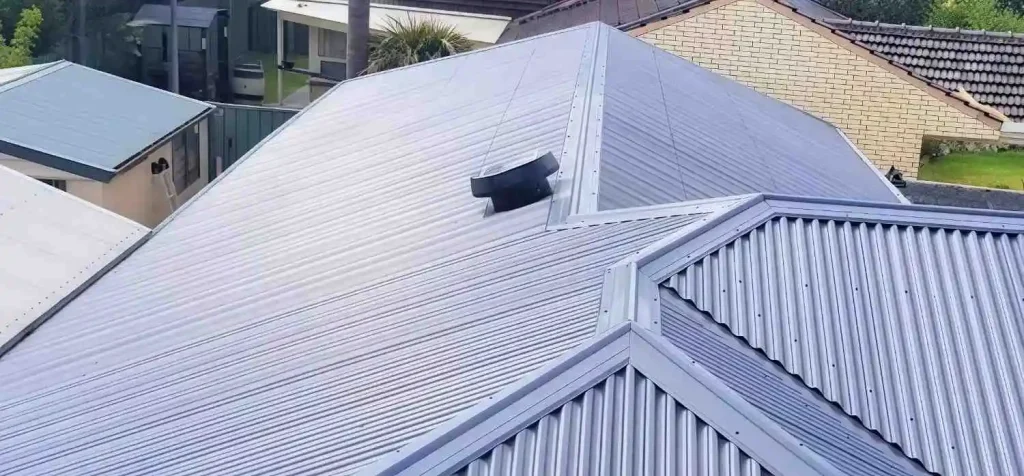
Without ventilation, the heat trapped in your roof cavity can seep into the rooms below, making the air conditioner work twice as hard. A good vent pulls that heat out, keeping the space cooler and the indoor temperature more comfortable. In winter, vents stop condensation from forming on the underside of your metal sheets. That’s important because moisture is the biggest culprit behind rusted fixings and mouldy insulation.
By pushing out trapped heat, vents lower the roof cavity temperature by up to 20°C in summer. This directly reduces how often and how hard an air conditioner needs to run. And for solar-powered vents, there are zero running costs because they operate entirely on sunlight.
Common warning signs include mould or mildew on ceilings in rooms under the roof space; attic or roof cavity heat that feels unbearable to stand in during summer (often well over 50°C); rust or water staining on roof battens, screws, or sheet undersides, particularly in older Colorbond® roofs; and stale, stuffy indoor air even when windows are open.
The right roof vents for metal roofs keep your Adelaide home cooler, drier, and healthier. Combine them with a quality Colorbond® roof replacement, and you’ll secure a comfortable and long-term protection.
Visit our showroom at 2/22 O’Sullivan Beach Road, Lonsdale, SA to see ventilation options in person. Or call or contact us for a free quote and other enquiries.