Does Insurance Cover Roof Replacement?

Roof & Render SA Logo

Storms are a regular part of life in South Australia, and Adelaide is no exception. Strong winds and heavy rain often leave roofs damaged, from loose tiles to leaks that start small but can quickly get worse.

If you’ve noticed water stains or damage after a storm, you’re probably asking yourself whether insurance covers roof replacement.

Yes, some claims are approved, but insurers do not automatically replace roofs. They look at a few key factors, including whether the damage was sudden, what caused it, and whether maintenance issues contributed. Understanding what insurers look for can make the difference between a successful claim and one that gets rejected.

After four generations working on South Australian roofs, we’ve seen the heartbreak of rejected claims. More importantly, we know what insurers look for and how to give your claim the best chance of success. This article explains how to improve your chances of a successful roof replacement insurance claim.
When Insurance Pays for Roof Replacement?

insurance roof replacement

Home building insurance is designed to cover sudden, accidental damage. Not maintenance. Not ageing. Not things that were already failing.

The events that typically result in a successful roof claim:

Storm and severe weather: High winds that lift ridge capping or sheets, hail that fractures tiles or penetrates metal, wind-driven rain that forces water through flashings that were otherwise intact.

Falling trees or branches: Impact damage from a tree or limb coming down onto the roof during a storm, usually clear-cut, provided the tree wasn’t already dead or rotted (foreseeable damage is sometimes excluded).

Fire: Covered under most standard policies for the full replacement cost.

Vandalism: Covered where deliberate damage can be documented.

Key Factor for a Successful Claim

A specific event caused a specific failure on a specific date. That’s the story insurers need to follow. If you can tell it clearly and document it, you’re in a reasonable position.

Did you know: A 2023 report by the General Insurance Code Governance Committee found that more than half of denied home insurance claims were rejected on wear-and-tear or maintenance grounds. Nearly half of those denials were later overturned in the claimant’s favour. If you’ve been knocked back, it’s worth pushing back.

When Insurance Won’t Cover Roof Replacement?

The most common rejection reasons:

  • Wear and tear: The material degraded over time. Tiles became porous, metal corrugated iron rusted through from the inside, and sealants dried out. This is the most common denial reason and also the most commonly disputed.
  • Gradual deterioration: Water has been coming in slowly, probably through a failed flashing or cracked tile that has been there for years. The insurer argues there was no single event but an ongoing issue caused by neglect.
  • Lack of maintenance: Gutters that have been clogged for years can overflow into the fascia. Repointing that was long overdue can also lead to damage. These issues are usually listed as exclusions in most insurance policies.
  • Pre-existing defects: The problem existed before your policy started or before the storm occurred. Insurers often use their own assessors to argue this, sometimes aggressively.
  • Foreseeable damage: A dead tree overhanging your roof that eventually falls may be treated differently than a healthy tree brought down by an extreme storm.

What homeowners need to know while claiming?

When speaking with an insurance assessor, avoid mentioning that the roof had previous issues or that you were planning to replace it. Insurers focus on the cause of the current damage. Stick to describing what happened during the storm or incident and provide evidence of the damage itself.

Understanding Section 54 of the Insurance Contracts Act 1984

To understand if a roof replacement is covered by insurance in Australia, you have to analyse the Insurance Contracts Act 1984.

According to it, an insurer cannot refuse your claim entirely because of something you did or didn’t do after taking out the policy, unless that action actually caused or contributed to the loss.

For example, an insurer might say gutters were full of debris and that caused water to back up, damaging the fascia. They may use this to reduce your payout.

However, if the main damage such as lifted ridge capping and water ingress was caused by the storm itself, Section 54 limits how much the insurer can rely on the gutter issue.

Section 54 doesn’t turn a neglected roof into a covered roof. What it does is stop an insurer using a technicality, an unrelated policy condition or minor omission to wipe out a legitimate claim entirely.

AFCA (the Australian Financial Complaints Authority)

If your claim has been declined and you believe the core damage was caused by a covered event, this is worth raising. You can escalate to AFCA (the Australian Financial Complaints Authority) at no cost.

When to Claim Partial Repair or Full Roof Replacement?

When a claim is approved, insurers will generally prefer to repair rather than replace if a like-for-like fix is possible. Full replacement becomes the outcome when:

  • The damage is widespread, not isolated to a small section.
  • Matching materials are no longer available, making a clean repair impossible.
  • The roof is at a point where a partial repair would not restore it to a watertight, compliant finish.

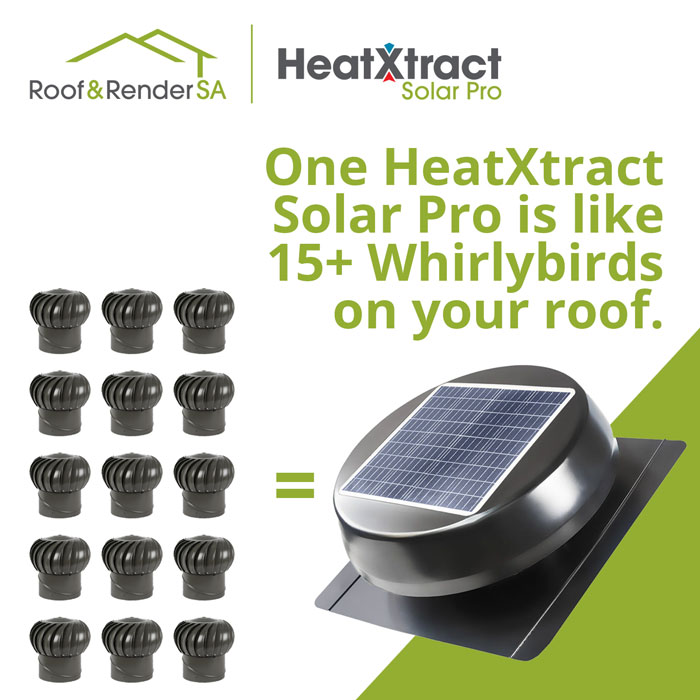
STOP PAYING TO COOL AN OVEN!

A Smart Solar Ventilation system automatically extracts that trapped heat, lowering temperatures by up to 25 degrees with ZERO running costs. Grab a 15% OFF on your HeatXtract Pro plus professional installation.

Cash Settlements: What to Check Before You Accept

A lot of Australian insurers (Suncorp, NRMA, Allianz, among others) don’t replace a roof just because it’s damaged; they replace it when the cost of repair exceeds a specific percentage of the total replacement value.

If a hailstorm damages 15% of your tiles, the insurer will likely pay for a patch and match repair ($3,000–$5,000).

But if the damage exceeds 20-30% of the surface area, or if the specific tile/profile is no longer manufactured (obsolete), they are often forced to pay for a full replacement ($15,000–$35,000 for a standard 200m² home).

When you make an insurance claim for your roof, the insurance company does a quick math problem to see what is cheaper for them.

  • ​Option A (Repair): They send their own builder to fix it. This costs them, let’s say, $8,000.
  • Option B (The Roof’s Value): They look at your roof and say, “Wait, this roof is 25 years old and was already falling apart before the storm.” It’s only actually worth about $5,000 now.

​Because the repair ($8,000) is more expensive than what the roof is actually worth ($5,000), they won’t fix it. Instead, they will offer you a cash settlement.

Before accepting any cash offer:

  1. Confirm exactly what the cash amount is meant to cover: roof only, or full scope including flashings, gutters, and insulation?
  2. Ask whether it’s a final settlement or a partial payment with scope for further claims.
  3. Get your own independent quotes before accepting. If quotes come in higher, go back to the insurer with the evidence.
  4. Check whether GST is included. Some settlements are quoted ex-GST, which matters on a $30,000+ job.

Adelaide Roof Insurance: Inclusions and Exclusions

When it comes to Adelaide weather, insurers draw a very sharp line between an act of God and a failure of maintenance.

Here is a summary of how local claims are typically split:

Feature

Covered (Defined Event)

Often Excluded (Maintenance)

Typical Example

Large hail shattering tiles or denting metal roofing during an October storm.

A slow leak appearing in 40-year-old porous terracotta tiles after a normal rain.

Wind Impact

Gusts >90km/h peeling back steel roofing sheets or ridge capping.

Flashing or sheets lifting because the original nails have rusted through over decades.

Debris

A heavy limb from a River Red Gum falling and crushing the roof structure.

Blocked gutters causing water to backflow into the ceiling and eaves.

Cause of Leak

A visible hole created by a sudden, external force (branch, hail, flying debris).

Gradual deterioration, sun-bleached materials, or lack of routine repairs.

Timeline

Sudden and accidental (happened within hours of a documented storm).

Pre-existing damage or leaks that have been ignored for months.

How to put yourself in the best position before and during a claim?

Here are strategic tips to secure insurance coverage for your roof replacement:

  1. Take photos immediately (inside and outside)
    Ceiling stains, lifted sheets, damaged capping, water ingress points. Time-stamp everything. Before you touch anything.
  2. Document the weather event
    Save the Bureau of Meteorology data for your suburb on the date in question. Wind speed, rainfall intensity, any issued severe weather warnings. This is the objective evidence your insurer can’t easily argue with.
  3. Get a licensed roof inspection before the insurer’s assessor controls the narrative
    An independent roof report from a licensed contractor — obtained before the insurer sends their own assessor — gives you your own expert record. Once the insurer’s assessor has filed their report, it’s harder to dispute.
  4. Use precise language in all written communications
    Terms like ‘storm event’, ‘sudden impact’, ‘wind-lift’, ‘hail strike’, and ‘water ingress from storm-created opening’ frame the cause correctly. Avoid phrases like ‘it’s been leaking a bit’ or ‘the roof was already in rough shape’.
  5. If declined, request the full written reasons and assessor’s report
    You’re entitled to this. Reading the specific grounds for denial tell you exactly where to push back. If wear-and-tear is cited but the primary damage was storm-related, that’s where Section 54 and an AFCA complaint may apply.

How Upgrading to COLORBOND® Steel Can Affect Your Policy?

A roof that’s been replaced with COLORBOND® steel often has a measurable effect on your ongoing insurance premiums. Steel is rated better than concrete tile or asbestos cement for hail resistance, fire resistance, and structural performance in high-wind events.

Some insurers price that into their renewal. It’s worth asking your insurer what a new steel roof means for your coverage terms before the next storm makes it urgent.

A Complete Roof Replacement Claim

If storm damage has affected your roof, Roof & Render SA can provide a licensed inspection, detailed documentation, and a free quote for a complete roof replacement (we do not offer partial repairs). With over 100 years of experience replacing South Australian roofs, we know exactly what assessors look for to help your claim succeed.

Take control of your home today. Call 08 8451 6116, book an inspection online, or visit our Lonsdale showroom to discuss your roof replacement options with our licensed specialists.

Related Articles