Solar Roof Ventilation and Its Benefits: A Guide for Adelaide Homeowners

Roof & Render SA Logo

Does your upstairs bedroom feel like a pre-heated oven by 11:00 am? Is your master suite hitting 32°C before you’ve even thought about dinner?

If your upstairs bedroom hits 32°C before noon, your roof is the problem, not your air conditioner.

Adelaide summers are brutal. On a 42°C day, the air inside your roof cavity can reach 70°C. That heat doesn’t stay in your roof. It pushes down through your ceiling, saturates your insulation, and turns your living space into an oven that no air conditioner can keep up with.

A solar roof vent fixes this. This guide explains how it works, what it costs you, and what to look for in Adelaide’s specific climate.

How Solar Roof Ventilation Works

The physics are simple. Radiant heat from the sun transfers into the air inside your roof cavity. That superheated air has nowhere to go, so it stays there, bakes your rafters, and eventually pushes into your living spaces below.

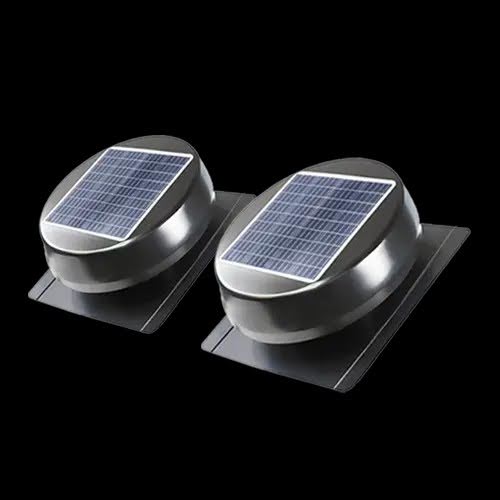
A solar roof vent breaks that cycle through active extraction. The unit’s photovoltaic panel converts sunlight into electricity, which drives a brushless DC motor spinning a high-volume impeller. Hot air is pushed out of the roof, while cooler outside air is drawn in through the eaves.
solar roof ventilation

How is a Solar Roof Vent Different From a WhirlyBird?

Solar Roof Vent vs. WhirlyBird: What’s the difference?

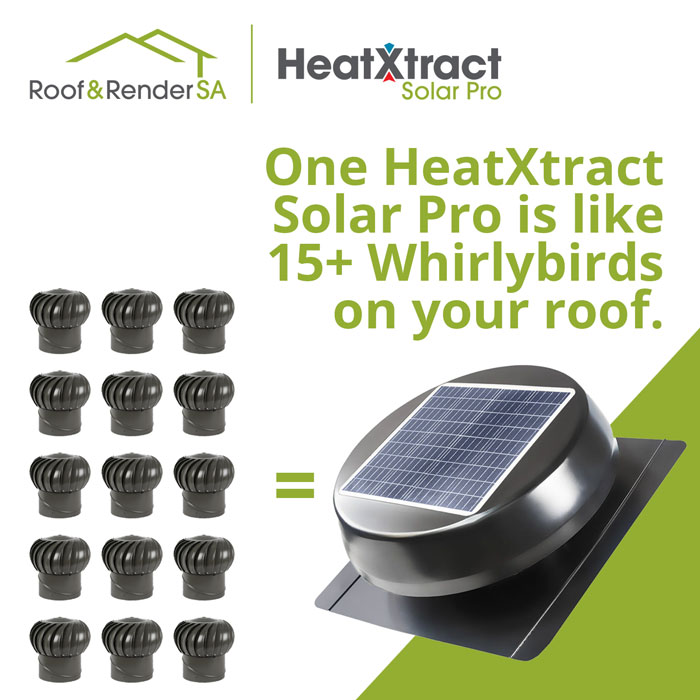
Difference between a solar vent and a whirlybird comes down to one thing: a whirlybird waits for wind, a solar vent doesn’t. It reaches peak extraction exactly when you need it most. The hotter and sunnier the day, the harder it works.

Why Adelaide Homes Need Active Roof Ventilation

Roof heat is more than a comfort problem. A 70°C roof cavity causes real structural and financial damage over time.

Structural damage: That sustained heat slowly dries out and weakens your timber rafters, making them brittle and prone to cracking over decades.

Insulation failure: An R4.0 batt tested at standard temperatures can perform like an R2.0 when the cavity around it hits 70°C. Ventilation restores that lost performance.

Cooling inefficiency: When the air above your ceiling is 70°C and your ducted AC is trying to push cold air through pipes baking in that heat, your energy bill climbs. Dropping the cavity temperature to around 45°C can improve AC efficiency by 15% to 20%.

Condensation and attic rain: In winter, moisture from showers and cooking rises into the roof cavity. When warm moist air hits a cold steel roofing sheet, it condenses. Left unchecked, this leads to mould in your ceiling joists within a single season.

Appliance wear: A ducted AC unit working harder than it needs to wear out faster. Cooling the roof space can add years to its life.

​If you are planning a roof replacement, adding these systems is the smartest move you can make. ​Reach out to us or call 08 8451 6116 to talk about your options.

STOP PAYING TO COOL AN OVEN!

A Smart Solar Ventilation system automatically extracts that trapped heat, lowering temperatures by up to 25 degrees with ZERO running costs. Grab a 15% OFF on your HeatXtract Pro plus professional installation.

Comparing Your Ventilation Options

Not all roof ventilation is equal. Here’s how the main options compare for South Australian conditions:

Option

How It Works

Best For

Limitation

Solar vent

PV panel powers a brushless motor

Hot, still days; peak summer extraction

Higher upfront cost than passive options

Whirlybird

Wind-driven spinning turbine

Breezy coastal areas

No wind, no extraction

Mains-powered fan

Hardwired electric motor

Reliable extraction regardless of sun

Ongoing power cost; requires electrician

Passive ridge vent

Convection only

Mild climates

Minimal extraction in dead-still heat

For most Adelaide homes, the solar vent wins. It has zero running costs and delivers its strongest performance on the exact days you need it most.

Pros and Cons of Solar Roof Vents

The pros:

  • Zero running costs: You pay for the unit and installation once. After that, the sun powers it for 20+ years.
  • Active extraction on still days: No breeze required. It works on those dead-still 42°C days when a whirlybird is useless.
  • Thermostatic control: Most quality units only activate when the roof reaches 28°C. They won’t pull warm air out in winter when you want to keep it.
  • Quiet operation: High-quality brushless motors are nearly silent, with no vibration and no mechanical wear.
  • Moisture control: They flush damp air in winter, protecting your insulation and timber from attic rain.

The cons:

  • Higher upfront cost than a basic hardware store whirlybird.
  • Aesthetic impact: Larger units can look industrial. This can be minimised by matching the unit to your COLORBOND® colour.
  • Shading: If your roof sits under heavy tree cover, the panel won’t generate enough power to be effective.
    Over-ventilation risk: Too many units without adequate eaves intake can create negative pressure inside the house. A proper installation assessment prevents this.

What to Look For in a Quality Solar Vent Unit

If you live near the coast (Brighton, Largs Bay, Semaphore) salt spray is a silent killer for roof hardware. Look for housing made from UV-stabilised polymers or powder-coated BlueScope® steel.

For the Adelaide Plains, heat endurance matters more. Look for motors with high-grade Japanese ball bearings, rated to spin for 10 hours a day without seizing.

Quality units, like the HeatXtract Solar Pro installed by Roof & Render SA, include:

  • Adjustable photovoltaic panels that tilt north for maximum sun capture
  • Brushless DC motors with zero friction
  • High-volume impellers capable of moving 2,100+ cubic metres of air per hour
  • Custom-fitted flashing sealed to the exact corrugation profile of your COLORBOND® roof

How Many Solar Vents Does Your Roof Need?

The goal is roughly 10 air changes per hour in your roof cavity. Under-ventilating is one of the most common mistakes. One small vent on a large home does almost nothing.

Here’s a practical way to calculate what you need:

  • Measure your floor area in square metres
  • Estimate your average roof void height (typically 1.0–1.5m)
  • Multiply to get the total volume (e.g., 200m² × 1.5m = 300m³)
  • Multiply by 10 for your target airflow in CMH (e.g., 300 × 10 = 3,000 CMH)
  • Divide by your unit’s rated output (e.g., 3,000 ÷ 1,500 = 2 units)

As a general guide: most 100–200m² homes need 1–2 units. Place them at opposite ends of the ridgeline to create a cross-flow effect.

A few other factors that affect the number you need:

  • Roof colour: A Surfmist® roof absorbs less heat than a Deep Ocean® roof, so it may need slightly less extraction.
  • Roof pitch: Skillion and low-pitch roofs have very little air gap and heat up fast.
  • Ducted AC: If pipes run through your roof cavity, you need enough ventilation to keep those ducts cool.

CTA: Not sure how many you need?

Book a roof inspection and we’ll calculate it for you.

Installing Solar Vent During a Roof Replacement

Installing ventilation during a roof replacement is the most cost-effective time to do it. The roof is already stripped. Apertures are cut with precision, and flashing is integrated under the ridge capping before the new COLORBOND® sheets go on. There are no exposed edges and no risk of leaks.

If you are investing in a 40-year roof, adding the ventilation system at the same time is the logical decision both financially and practically.

How Roof & Render SA Can Help

Roof & Render SA are Adelaide’s experts in roof replacement and solar roof ventilation. We can upgrade your entire roof or install standalone HeatXtract Solar Pro vents to remove hot air from your roof space. This reduces indoor temperatures, improves energy efficiency, and helps your air conditioner work less.

We handle everything professionally, including licensed asbestos removal if needed. All installations come with a 2-year warranty on vents and up to 45 years with BlueScope® roofing.

Protect your home, save on energy bills, and improve comfort.

Book a free inspection: 08 8451 6116

Or visit our showroom: 2/22 O’Sullivan Beach Road, Lonsdale

Related Articles