
In a nutshell, to install Colorbond® roofing, your roofer will remove the existing roof (if any), prepare the structure, lay insulation or a vapour barrier, then secure Colorbond® sheets with proper flashings, fixings, and roof plumbing to ensure a watertight and compliant finish.
If you’re looking to replace your old roofing materials with a properly installed roof, there’s no better option than Colorbond roof installation. It’s lightweight, strong, weatherproof, long-lasting, and aesthetically pleasing, making it ideal for bushfire zones and built to handle everything from the searing sun to coastal winds.
At Roof & Render SA, we’ve been helping families transition to COLORBOND® steel for over four generations. With over 100 years in the South Australian roofing business, Adelaide and the rest of South Australia trust our team for quality workmanship, genuine advice, and a watertight 20-year warranty you won’t find just anywhere.
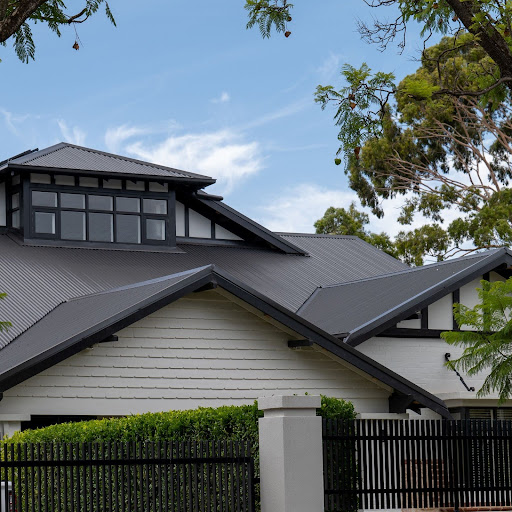
Installing Colorbond® roofing doesn’t start and end with fixing down steel sheets. It’s a precise, weather-dependent job that requires the right tools, materials, and licensed professionals, especially when dealing with old roofing materials like tiles or asbestos.
Here’s a simplified breakdown of the professional process:
The condition and structure of your existing roof (e.g., tile, asbestos, or old metal) is assessed for safe removal.
Next, your roofer will carefully remove all old roofing materials, including roof tiles, sarking, battens, and damaged sheets. For asbestos roofs, a licensed asbestos removalist may be engaged.
Your roofer will inspect the roof trusses and reinforce them if necessary. New timber or metal battens are installed to suit the minimum roof pitch and corrugated profile of Colorbond® sheets.
A roofing blanket (often with insulation) or vapour barrier is laid under the Colorbond® sheets. This adds thermal efficiency, soundproofing, and prevents condensation.
Your roofer will overlap the sheets, cut to size, and secure using weather-tight fasteners. Special attention is paid to valley fixing and ridge cappings to ensure no leaks.
At Roof and Render SA, our roofers install gutters, fascia covers, downpipes, and custom flashings as part of the roof’s plumbing system.
We inspect your new steel roof and test it before handing over your 20-year watertight warranty and relevant BlueScope warranties.
For most South Australian homes, the total Colorbond roof cost (including both labour and materials) ranges between $50 to $100 per square metre, depending on:
If you’re switching from a tiled or asbestos roof to Colorbond® steel, the cost can be significant, but so are the long-term benefits in durability and energy efficiency.
Here’s what to expect:


When properly installed and properly maintained, a Colorbond® roof can last 45 years or more. This makes it one of the longest-lasting roofing materials on the Australian market today.
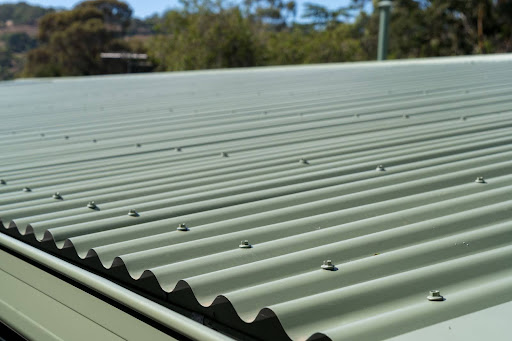
Even though Colorbond® roofs can last for several decades, their real-world lifespan depends on several measurable factors:
BlueScope® Steel offers a warranty of up to 45 years, while we at Roof & Render SA back our work with a 20-year watertight warranty, a 10-year workmanship warranty. However, regular inspection every 2–3 years and cleaning can help ensure your Colorbond® roof lasts its full lifecycle.
Installing Colorbond® roofing is never a DIY task, especially if you’re replacing a tiled or asbestos roof. At Roof & Render SA, we don’t touch pergolas or carports. We specialise in whole-roof replacements for family homes, unit groups, and select commercial roof replacement projects exceeding 100 sqm. Every project is fully compliant with Australian Standards, council-approved, and installed with energy efficiency, storm resilience, and long-term performance in mind.
Whether you want to improve your home’s aesthetic appeal, upgrade to energy-efficient roofing, or need a reliable fix for old roofing materials, we’ve got you covered with South Australia’s largest Colorbond® showroom. Visit us soon at Lonsdale at 2/22 O’Sullivan Beach Rd or call us for an inspection on +61884516116.
Roofers install a roofing blanket (usually made of foil-laminated glass wool) or a vapour barrier beneath the Colorbond® sheets. This layer provides thermal insulation, helps regulate roof space temperatures, reduces noise from rain or hail, and prevents condensation from forming on the underside of the sheets, especially in cooler climates such as the Adelaide Hills or Mount Barker.
Yes, if you choose the correct product variant. Colorbond® Ultra is engineered explicitly for coastal environments (within 500 metres of the surf), where salt spray can rapidly corrode standard metal roofs. For bushfire-prone zones, all Colorbond® products are non-combustible and compliant with AS 3959, meeting Bushfire Attack Level (BAL) ratings when paired with appropriate flashings and fire-resistant sarking.
Yes. Replacing a tiled roof with Colorbond® steel is a popular upgrade in South Australia for its strength, weight reduction, and low maintenance. Tiles are heavy and prone to cracking or moss growth, whereas Colorbond sheets are approximately one-tenth the weight of concrete tiles, reducing stress on the roof framing. Most tile-to-metal conversions range from $20,000 to $60,000, depending on the roof size, slope, access, and any additional upgrades, such as guttering or roof vents. For more information, book a consultation now or call us today to speak with a Colorbond® roofing expert.